
TMJ Disorder Causes and How Massage Can Relieve Jaw Pain
Jaw pain can feel small at first, then suddenly it touches everything: chewing, yawning, talking, sleeping, even concentrating. The temporomandibular joints sit just in front of the ears and connect the jawbone to the skull. When the joint, the muscles around it, or both become irritated, the result is often called TMJ disorder or TMD.
The causes are not always obvious. For some people, jaw pain follows a dental procedure, an injury, or weeks of clenching during stress. For others, it builds slowly from tight muscles, posture habits, grinding at night, or joint changes. Massage can help many cases, especially when muscle tension is a major part of the problem, but it works best when the true cause is understood.
This article is for general education only. Jaw pain can come from dental, joint, nerve, sinus, or medical issues, so persistent or severe symptoms should be evaluated by a qualified health professional.

What TMJ disorder means
The term TMJ refers to the temporomandibular joint itself. There is one on each side of the head. These joints let the jaw hinge, glide forward, move side to side, and absorb force while chewing.
The more accurate term for problems in this area is TMD, or temporomandibular disorder. In everyday speech, many people still say TMJ disorder when they mean jaw pain, clicking, tightness, or limited motion.
Common symptoms include:
Pain in the jaw, cheek, temple, or around the ear
Clicking, popping, or grinding sounds when opening the mouth
Jaw fatigue while eating
Trouble opening wide
A feeling that the bite does not line up
Headaches, especially near the temples
Neck tension that seems connected to jaw symptoms
Ear fullness or aching when no ear infection is present
A click by itself is not always a problem. Many jaws click without pain or loss of function. Pain, locking, worsening range of motion, or changes in bite deserve more attention.
What can cause TMJ disorder?
TMJ pain usually has more than one cause. The joint may be irritated, the chewing muscles may be overworked, or both may happen at the same time. The nervous system can also turn up pain sensitivity when stress, poor sleep, or long-term tension are present.
Clenching and grinding can overload the jaw
Clenching means pressing the teeth together. Grinding, also called bruxism, means sliding the teeth against each other, often during sleep.
Both habits load the jaw muscles for far longer than normal chewing does. The masseter and temporalis muscles may stay partly contracted for hours. Over time, they can become sore, tight, and sensitive to pressure.
Clenching can also happen during the day without anyone noticing. Common moments include driving, lifting weights, concentrating, working at a computer, or feeling anxious. A helpful clue is this: the teeth should usually be apart when not eating or swallowing. If they are touching often, the jaw is probably working more than it needs to.
Stress and poor sleep can increase muscle guarding
Stress does not mean jaw pain is “all in your head.” Stress changes muscle tone, breathing patterns, sleep quality, and pain sensitivity. When the body stays on high alert, the jaw often joins in.
Poor sleep can make the cycle worse. A tired nervous system tolerates stress and pain less well. If nighttime grinding is present, waking with jaw stiffness or morning headaches may be common.
Dental and bite changes may contribute
The jaw has to coordinate with the teeth. A new crown, missing tooth, recent orthodontic change, or uneven bite can sometimes irritate the system. Dental work that requires the mouth to stay open for a long time can also strain the joint and muscles.
That does not mean every TMJ problem comes from the bite. Many do not. Still, bite changes, new dental pain, and jaw symptoms that start after dental work should be discussed with a dentist.
Joint irritation, arthritis, and disc problems can play a role
Inside the TMJ is a small disc that helps the jawbone move smoothly. If that disc becomes displaced or irritated, the jaw may click, catch, or lock. Inflammatory joint conditions and osteoarthritis can also affect the TMJ, just as they affect other joints.
Joint-related symptoms may feel deeper than muscle soreness. There may be sharp pain with biting, joint noise with movement, or a sense that the jaw does not track smoothly.
Injury can trigger lingering jaw symptoms
A fall, car accident, sports impact, or direct blow to the chin can strain the jaw joint. Whiplash can also affect the jaw because the neck and jaw share muscles, nerves, and movement patterns.
Even when imaging does not show major damage, the muscles may guard the area after trauma. That guarding can become part of the pain cycle.
Neck posture and breathing habits can add strain
The jaw does not work alone. Forward head posture, rounded shoulders, shallow breathing, and neck tension can change how the jaw muscles behave.
For example, holding the head forward can increase tension under the jaw and around the temples. Mouth breathing may also keep the jaw slightly open and alter tongue position. These patterns do not cause every case of TMJ pain, but they can keep symptoms going.

The main muscles involved in TMJ pain
Massage is often helpful because many TMJ symptoms involve irritated chewing muscles. The most important muscles include the masseter, temporalis, and pterygoids. Neck and throat muscles can also contribute.
The masseter is the powerful cheek muscle
The masseter sits at the side of the jaw, running from the cheekbone to the lower jaw. It is one of the strongest chewing muscles.
When the masseter is tight, pain may show up as:
Cheek soreness
Jaw aching near the angle of the jaw
Tooth-like pain without a clear dental cause
Difficulty relaxing the jaw
Tender knots when pressing the cheek
People who clench often have sore masseters. This muscle is easy to reach from the outside of the face, which makes it a common focus in massage.
The temporalis can refer pain to the temples and teeth
The temporalis is a fan-shaped muscle on the side of the head. It helps close the jaw and pull it back.
When irritated, it can cause temple headaches, scalp tenderness, and pain that feels like it is coming from the upper teeth. People often rub their temples without realizing they are working on a jaw muscle.
The medial pterygoid sits deep on the inner jaw
The medial pterygoid is inside the lower jaw, roughly mirroring the masseter but on the inner surface. It helps close the jaw and move it side to side.
Tension here can create deep jaw pain, throat-area discomfort, or pain when chewing. Because it is partly inside the mouth, direct work on it is usually done by trained massage therapists, physical therapists, or dental professionals who use gloves and proper technique.
The lateral pterygoid helps guide the jaw joint
The lateral pterygoid is small, deep, and important. It helps open the jaw and guide the disc and condyle during movement.
When this muscle is irritated, the jaw may feel uncoordinated. Some people notice clicking, deviation to one side when opening, or discomfort deep in front of the ear. This muscle is not easy to self-massage safely, so indirect work and professional care are often better choices.
The neck muscles can keep jaw tension alive
Several neck muscles can feed into jaw symptoms:
Sternocleidomastoid
This muscle runs from behind the ear to the collarbone and breastbone. It can refer pain to the jaw, ear, and head.
Upper trapezius and levator scapulae
These shoulder and neck muscles often tighten with stress and posture strain.
Suboccipitals
These small muscles at the base of the skull can contribute to headaches and jaw guarding.
Digastric and suprahyoid muscles
These muscles sit under the jaw and help with opening the mouth, swallowing, and tongue support.
A jaw-only approach may miss the bigger picture. Many people need work on the jaw, temples, neck, and shoulders.
How massage can help relieve TMJ pain
Massage does not “put the jaw back in place.” Its main value is calming overactive muscles, reducing tenderness, improving local circulation, and helping the nervous system downshift.
When muscles stop guarding, the jaw often moves more freely. Chewing may feel less tiring. Headaches may ease. The joint may also experience less compression because the muscles are not pulling as hard.
Massage may help in several ways.
It reduces trigger point sensitivity
Trigger points are tender, irritable spots in muscle tissue that can refer pain elsewhere. In TMJ problems, trigger points in the masseter and temporalis can mimic tooth pain, temple headaches, ear pain, and cheek aching.
Slow, gentle pressure can reduce sensitivity. The goal is not to crush the knot. Better results usually come from pressure that feels “good tender,” not sharp or threatening.
It helps the jaw muscles relax
A guarded jaw can feel stuck in a half-contracted state. Massage gives the muscles a clear signal to soften. This may improve mouth opening and reduce the urge to clench.
Relaxation also helps people notice jaw habits. After massage, it is easier to feel the difference between a resting jaw and a braced jaw.
It can calm the stress response
Jaw tension often rises with stress. Gentle massage, slower breathing, and warm compresses can reduce nervous system arousal. That matters because pain is not only a tissue issue. It is also a sensitivity issue.
When the body feels safer, pain often becomes less intense.
It supports better movement
Massage pairs well with controlled jaw movement. After the muscles soften, gentle opening, closing, and side-to-side motions may feel smoother. This should be pain-free or only mildly uncomfortable.
Aggressive stretching can backfire. The jaw does not respond well to being forced.

Safe self-massage for jaw tension
Self-massage should be gentle. More pressure is not better, especially near the jaw joint, nerves, and irritated tissues.
Try this short routine once or twice a day for a few minutes. Stop if pain increases, the jaw locks, or symptoms feel sharp.
Start with heat and relaxed breathing
Place a warm compress over the jaw and temples for 5 to 10 minutes. Breathe slowly through the nose if comfortable. Let the teeth separate and rest the tongue lightly on the roof of the mouth.
A useful resting position is:
Lips together
Teeth apart
Tongue relaxed
Jaw loose
This position reduces unnecessary muscle work.
Massage the masseter from the outside
Place two or three fingertips on the cheek, just in front of the lower part of the ear. Gently clench once to feel the masseter pop into your fingers, then relax.
Use small circles or slow strokes downward along the muscle. Work from the cheekbone toward the angle of the jaw. Spend 30 to 60 seconds on each side.
Keep pressure moderate. If the muscle feels bruised afterward, use less pressure next time.
Massage the temples
Place fingertips on the temples. Slowly make circles through the temporalis muscle. Move slightly upward and backward across the side of the head.
This can be especially helpful for temple headaches linked to clenching.
Release under the jaw carefully
Use light pressure under the chin and along the soft area inside the lower jawbone. This area can be sensitive. Do not dig deeply.
Small, gentle strokes can help the muscles that assist with jaw opening and tongue position.
Add easy jaw movement
After massage, open and close the mouth slowly while watching in a mirror. The jaw should move without forcing. If it shifts to one side, try smaller movements.
A simple drill is controlled opening:
Place the tongue lightly on the roof of the mouth.
Open only as far as comfortable.
Close slowly.
Repeat 5 to 8 times.
The goal is comfort and control, not a wider stretch.
When professional massage may be more helpful
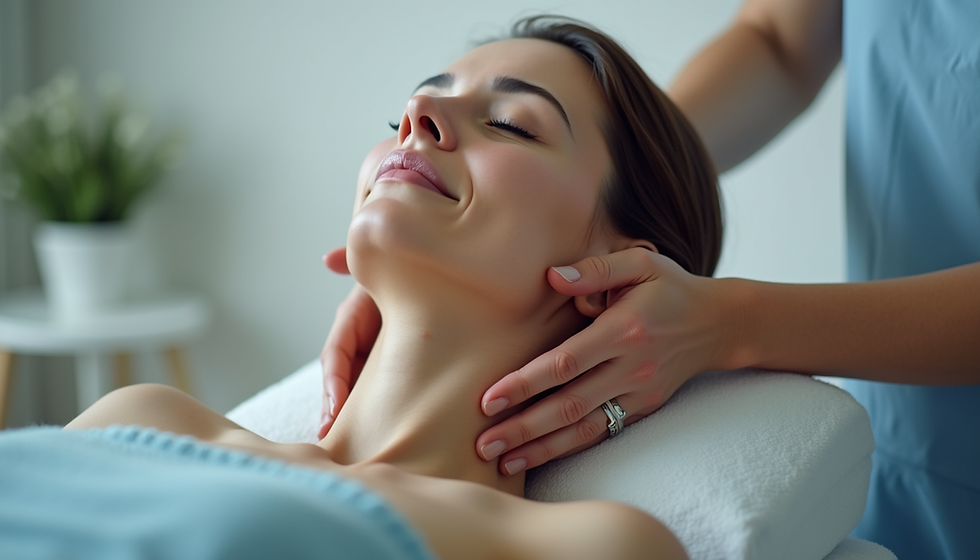
A trained therapist can assess the jaw, neck, head, and shoulders together. Professional care may include extraoral work on the face and temples, neck massage, trigger point therapy, gentle joint-friendly movement, and sometimes intraoral massage.
Intraoral massage means the therapist works inside the mouth with gloves. This can reach muscles like the medial pterygoid more directly. It should always be explained clearly, done with consent, and performed within the provider’s scope of practice.
Professional massage may be useful when:
Symptoms have lasted more than a few weeks
Jaw pain returns despite self-care
Headaches seem linked to chewing or clenching
Neck tension and jaw pain appear together
The jaw feels tired quickly while eating
Stress-related clenching is hard to control
Massage often works best as part of a broader plan. A dentist may check for grinding, tooth damage, bite changes, or the need for a night guard. A physical therapist may address jaw coordination, neck strength, and posture. A physician may evaluate arthritis, nerve pain, or other medical causes.

Signs that jaw pain needs medical or dental evaluation
Massage is not the right first step for every jaw problem. Get professional evaluation if symptoms are severe, sudden, or unusual.
Seek care for:
Jaw locking open or closed
New bite changes
Swelling, fever, or signs of infection
Severe tooth pain
Pain after a fall, accident, or blow to the face
Numbness, weakness, or facial drooping
Unexplained weight loss or persistent night pain
Jaw pain with chest pressure, shortness of breath, or pain spreading to the arm
Chest symptoms can be urgent. Call emergency services if jaw pain appears with possible heart-related symptoms.
Simple habits that support massage results
Massage can reduce symptoms, but daily habits often decide whether relief lasts. Small changes help lower the workload on the jaw.
Try these habits for a few weeks:
Keep teeth apart when not eating
Avoid chewing gum
Cut tough foods into smaller pieces
Limit wide yawning by supporting the jaw lightly
Use heat for tight muscles and cold for sharp irritation, if tolerated
Notice daytime clenching during driving, lifting, or concentrating
Sleep in a position that does not press the jaw sideways
Practice slow nasal breathing when stress rises
If nighttime grinding is suspected, self-control will not stop it because it happens during sleep. A dentist can check for signs and discuss options.
The takeaway on TMJ causes and massage relief
TMJ disorder can come from clenching, grinding, stress, dental changes, joint irritation, injury, posture, or a mix of these factors. The main muscles involved are the masseter, temporalis, medial and lateral pterygoids, and several neck and under-jaw muscles.
Massage can help when muscle tension, trigger points, and guarding drive the pain. It can ease soreness, improve comfort with chewing, and help the jaw relax. The safest approach is gentle, consistent work paired with better jaw habits and proper evaluation when symptoms persist.
A calmer jaw is usually built through small changes repeated often: relaxed teeth, softer chewing, less force, better sleep, and care that treats the jaw as part of the whole head and neck system.
Summary
TMJ release is beneficial for people experiencing jaw tension, teeth grinding, headaches, and neck discomfort related to jaw dysfunction. It can help reduce pain, improve jaw mobility, and promote relaxation, but clients with recent injuries, severe TMJ symptoms, or dental concerns should consult a healthcare professional before treatment.
At Hybrid Therapeutic Massage, we provide free consultation for the massage related based on your health conditions, budget, and time to maximize pain alleviation.
! Call for free consultation: 857-262-9468
! Booking: Add-on Services for TMJ Release 15 mins or 30 mins on www.hybridtherapeuticmassage.com/book-online
! Visit our website to learn more at: www.hybridtherapeuticmassage.com


Comments